1988
MAFF farm woodlands scheme introduced in response to CAP food mountains. Dame Elizabeth Frink becomes a patron. RBS affinity credit card launched.
July
Trust appoints a Computer and Systems Manager. The Trust was always at the forefront of new computer technology investing in a “microcomputer” in 1980 had given it the edge in direct response fundraising.
October
Moncreiffe Hill Wood, the largest acquisition in Scotland so far, 333 acres near Perth is purchased. Derek Marks becomes a Trustee.
Elizabeth Hamilton resigns: in a little over eight years with the Trust she had overseen an increase in the area safeguarded from less than 1000 acres to over 10,000.
1989
Nicholas Ridley, Secretary of State, proposes country-based conservation agencies and tries to attach strings regarding shooting rights in grant-aided woods. Countryside Commission announce plans for Community Forests: new woods in urban areas.
March
Hackfall Wood acquired, includes follies and listed buildings.
June
Legal issues are increasing: a landslip at Bucks Mills in Devon brings the involvement of Emma Nicholson, local MP, when the Trust disputes liability.
November
A painting by L.S. Lowry given to the Trust makes £52,000 at auction.
December
Acquisition of Pound Farm 233 acres in Suffolk, an opportunity to demonstrate large-scale woodland planting.
Pound Farm is followed a year later by Home Farm, 350 acres in Hampshire which together with other major sites sees a shift in the scope and scale of woodland creation activity.
1990
January storms, while not of the magnitude of 1987, were damaging. Hardwick Wood in Plymouth, a favourite of Kenneth Watkins, was badly hit.
Staff numbers now reach 50, Trust acquires its 400th wood.
January
KW awarded OBE for services to the Trust.
Philip Keeble appointed as Woodland Operations Director.
May
Bisham Wood, near Marlow, of “Wind in the Willows” fame, acquired.
June
Home Farm, Hampshire, purchased with a £1,275,000 gift from Lord Sainsbury. Oliver Rossetti, architect of the Trust deed, dies aged 79.
December
Planting of Barber Wood, near Cheltenham, marks the retirement of Sir Derek Barber as chairman of the Countryside Commission and is a prelude to our involvement in Community Forests and the New National Forest.
Mrs Thatcher resigns in November. Chris Patten introduces white paper “This Common Inheritance”.
1991
The Trust launches the “Create a Wood” campaign at Pound Farm inviting public sponsorship of the planting site. Over £300,000 was raised in two years.
February
Hedley Hall 135 acres in Tyne and Wear is our first purchase in a Community Forest (the Trust went on to acquire or create woods in all 12 Community Forests across England).
November
The Countryside Commission funds Willesley Wood 140 acres, launching the New National Forest in the Midlands.
In Scotland, the Mar Lodge estate becomes a cause celebre for the conservation movement. While the Trust plays a leading part in the campaign to save it, the National Trust for Scotland eventually acquires it. The Countryside Agencies and The Forestry Commission are reorganised.
1992
Prime Minister, John Major, launches the Cambridgeshire Woodland Fund to establish new community woods across the county. This formed the model for the later development of “Woods on your Doorstep”, the Trust’s Millennium project.
April
Trenant Wood in Cornwell becomes the Trust’s 500th wood.
July
Agreement to take on Commission for New Towns woods in Warrington and Runcorn with a record endowment.
Staff levels exceed 100. Trust publishes “Aims and Objectives” for internal training and promotes “Sense of Mission”. Scottish National Heritage formed.

External Events
Partly as the result of concern about growing food mountains the government introduced the Farm Woodlands Scheme to encourage the management of existing woods and new planting on farms. The newly appointed Secretary of State, Nicholas Ridley, proposed country-based conservation agencies, largely seen by conservationists as a backward step. The Countryside Commission announced plans to start a programme of Community Forests throughout England and a New National Forest in the Midlands. Green issues continued to attract public attention and the prime Minister, Mrs Thatcher, responded in September 1988 by highlighting the dangers from greenhouse gasses in a speech at the Royal Society of the Arts. Storms in January 1990, though not as bad as those in 1987, were damaging in the south west. Ridley was sacked and his successor Chris Patten introduced the white paper “This Common Inheritance”. In Scotland Mar Lodge becomes a cause celebre for the conservation movement. The countryside agencies and the Forestry Commission were reorganised. Mrs Thatcher was removed by her own colleagues in 1990.
Governance and Organisation
By 1990 staff numbers at the Trust had reached 50 and by 1992 exceeded 100. Organisational pressures were apparent and it became increasingly important to communicate the Trust’s “mission” and the values developed over almost 21 years. Much work was done on staff training and promoting our “Aims and Objectives”. In November 1988, after eight years with the Trust, Elizabeth Hamilton resigned. Derek Marks became a Trustee. The marketing and public affairs areas were strengthened with the appointment of Peter Stone and Hilary Allison. Philip Keeble joined in January 1990 as Woodland Operations Director. KW was awarded an OBE for his services to the Trust. A long legal wrangle started as a result of our ownership of the footpath and ancient lime kilns at Bucks Mills. The Trustees were still prepared to take risks acquiring Hackfall Wood in Yorkshire with its listed buildings and follies. Pound Farm, 233 acres in Suffolk, is acquired as the first large scale farm planting followed by Home Farm, 350 acres in Hampshire, purchased with funds provided by Lord Sainsbury.
Promotions and Marketing
As the country headed towards a recession in the early 1990s it became more difficult to recruit members. Uncertainties about future funds unsettled the Management Committee who instigated an “Efficiency Review”. However, response to the hurricane appeal and large-scale tree planting schemes was outstanding, income continued to grow and commercial sponsorship increased significantly. Newsletters highlighted wider issues such as climate change but research suggested that the Trust needed to engage more with the public. With the concentration of Countryside Commission grant aid now on large scale planting new sources of funding were required for other acquisitions. A clever combination of marketing and woodland management resources led to successful local fundraising whereby most future projects were self-funding.
Conservation and Woodland Management
“Create a Wood” at Pound Farm in Suffolk paved the way for our involvement in Community and National Forests. Initially, Pound Farm was excluded from the Farm Woodlands Scheme funding on a technicality but with the help of John Gummer, the local MP, the red tape was cut. The Trust rapidly acquired land for planting in the Community Forests and New National Forest. The Cambridgeshire Woodland Fund, started to establish new woods throughout the county, and was the forerunner for “Woods on Your Doorstep” the Trust’s Millennium project. Tyrells Wood in Norfolk was saved from clear felling but because of a “planning blunder” the Regional Officer had to buy back individual trees as they are being felled around her. The Trust publishes its “Woodland Management Principles” partly to promote the Trust’s approach and partly to inform its rapidly expanding Woodland Operations Department.
Achievements
As the Trust approached its 21st anniversary annual income exceeded £6million for the first time. The Trust acquired its 500th wood, Trenant Wood in Cornwall. Legacy income exceeded £1million. The Trust became a major player in the Community and National Forests having spent £1million on large scale woodland creation in just 18 months.
Related Posts:
Think like a beaver
Given the title, contributors to “Future Rural” spend a surprising amount of time looking back. Many of the essays are illustrated with hazy, black and white snaps from the writer’s childhood; often this was in the 1980s when I was in my prime! There are thirty-four contributors to this anthology celebrating 100 years of the […]
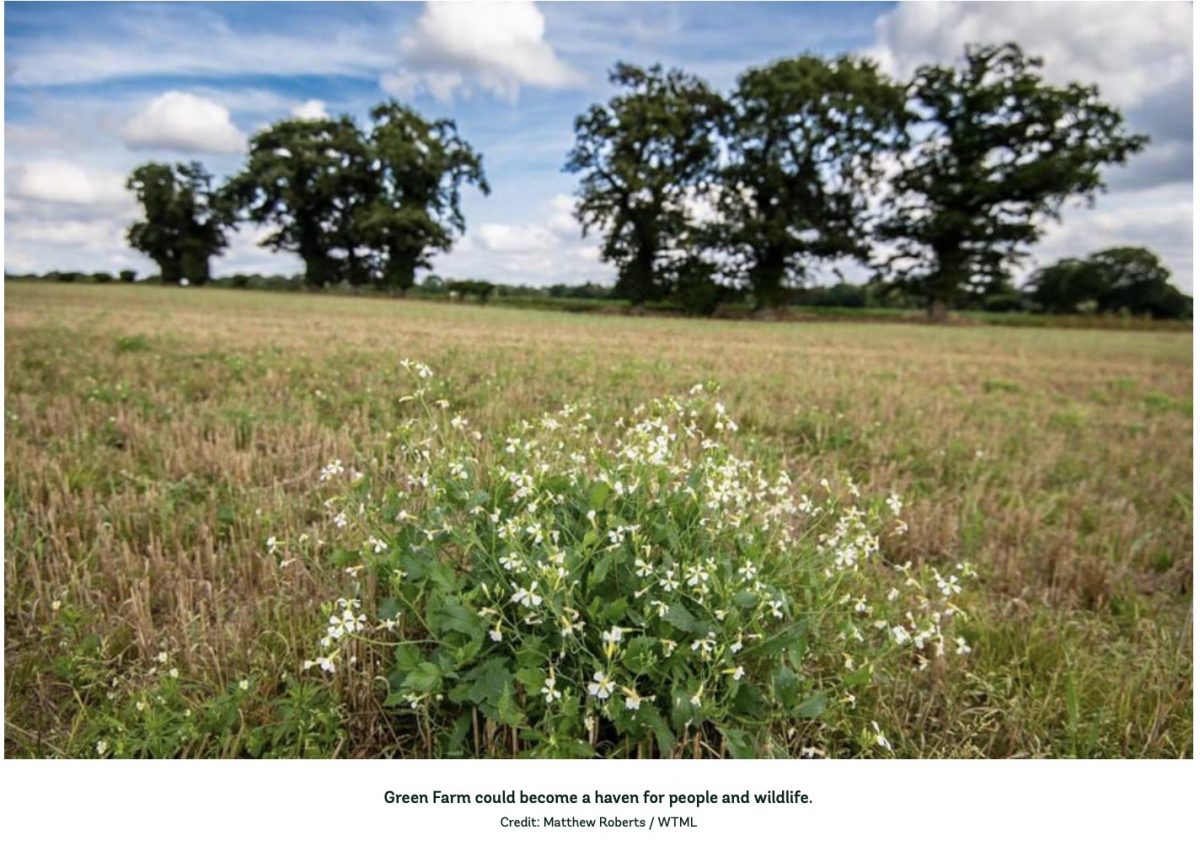
Green Farm Appeal
Woodland Trust Appeal for New Norfolk Wood Working in partnership with the Norfolk Wildlife Trust, the Woodland Trust is appealing for funds to transform 119 hectares of land near Thompson village in order to create areas of new woodland and bolster a unique habitat. Green Farm is currently agricultural land and lies in an area […]